
Table of Contents
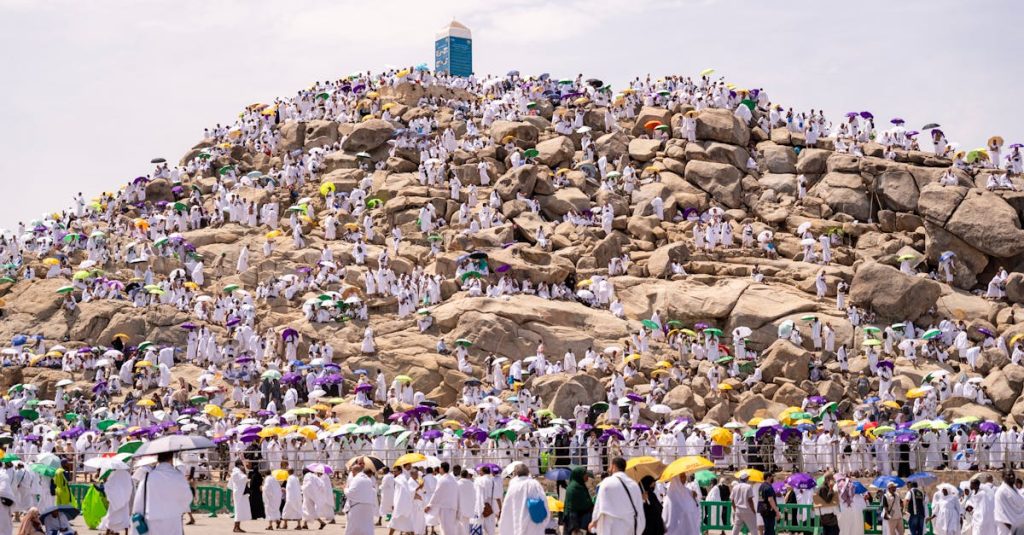
“Hajj is Arafah.” – Prophet Muhammad (peace be upon him). The 9th of Dhul Hijjah, the Day of Arafah, is the pinnacle of Hajj. It is the day when pilgrims stand on the plain of Arafah, united in worship and supplication. Because this moment is so vital, having a proper Day of Arafah guide and preparing for this blessed day can transform your entire Hajj experience.
Why the Day of Arafah is So Important
The Day of Arafah is unparalleled in its significance:
- It is the day when Hajj is considered complete – missing Arafah means missing Hajj
- It is the day when Allah frees the most people from Hellfire
- It is a day when duas are most likely to be accepted
- The Prophet (ﷺ) said: “There is no day on which Allah frees more people from the Fire than the Day of Arafah”
- It commemorates the final sermon of the Prophet Muhammad (ﷺ)
Preparing Before Arafah: The Night Before
1. Create Your Dua List (Most Important!)
This is one of the most valuable pieces of advice I can share from my personal Hajj experience. In the heat, exhaustion, and spiritual overwhelm of Arafah, it’s easy to forget what you wanted to ask Allah for. Creating a comprehensive dua list ahead of time ensures you don’t miss this golden opportunity.
My Personal Method:
Before leaving for Hajj, I created a detailed dua list in my phone’s notes app. I wrote down:
- Personal duas for my faith, family, health, career, and future
- Specific requests for each family member by name
- Names of friends, relatives, and community members who asked me to make dua for them
- Duas for the Muslim Ummah, for Palestine, Syria, Yemen, and all oppressed Muslims
- Duas for guidance for my loved ones who may be struggling with their faith
- Duas for deceased relatives and friends
When I stood on Arafah, I simply opened my phone and went through my list methodically. I didn’t have to worry about forgetting anyone or anything. This brought me immense peace and allowed me to focus fully on my connection with Allah.
2. Rest Well
The Day of Arafah is physically demanding. Get as much rest as possible in Mina the night before. Go to sleep early and try to wake up refreshed for Fajr.
3. Pack Your Essentials
Prepare a small bag with everything you’ll need:
- Water bottles (multiple) and hydration salts
- Umbrella for shade
- Prayer mat
- Phone with your dua list (fully charged with portable charger)
- Small Quran or digital Quran app
- Snacks: dates, nuts, energy bars
- Personal medications
- Sunscreen and lip balm
- Tissues and wet wipes
- Camp identification and emergency contact information
4. Make Intention
Renew your intention for standing at Arafah. Remind yourself why you are here and what you hope to achieve. Make a sincere intention to spend this day in worship, humility, and connection with Allah.
The Journey to Arafah (Morning of 9th Dhul Hijjah)
Pilgrims depart from Mina after Fajr prayer on the 9th of Dhul Hijjah, heading to the plains of Arafah. The journey is usually made by bus or on foot (about 14 km). Make dhikr and send salawat upon the Prophet during the journey.
What to Do on the Day of Arafah
Timeline and Activities
Morning Until Dhuhr:
- Arrive at your designated camp in Arafah
- Rest and preserve energy
- Engage in Quran recitation and dhikr
- Review your dua list one more time
After Dhuhr Until Sunset (The Most Critical Time):
This is the primary time for standing and supplication. The Prophet (ﷺ) would combine Dhuhr and Asr prayers at Dhuhr time, then devote himself entirely to dua until sunset.
- Perform combined Dhuhr and Asr prayers (shortened and combined at Dhuhr time)
- Face the Qiblah and raise your hands in supplication
- Pour your heart out to Allah – cry, plead, beg for His mercy
- Go through your dua list systematically
- Alternate between dua and dhikr
- Take short breaks to drink water and rest, but keep your focus on worship
- Stay until sunset – don’t leave early
Powerful Duas for Arafah
While you should make dua in your own words and language (Allah understands all languages), here are some powerful recommended duas:
1. The Best Dua of Arafah
The Prophet (ﷺ) said: “The best dua is the dua on the Day of Arafah, and the best that I and the Prophets before me have said is:”
لَا إِلَهَ إِلَّا اللَّهُ وَحْدَهُ لَا شَرِيكَ لَهُ، لَهُ الْمُلْكُ وَلَهُ الْحَمْدُ وَهُوَ عَلَى كُلِّ شَيْءٍ قَدِيرٌ
La ilaha illallahu wahdahu la sharika lah, lahul mulku wa lahul hamdu wa huwa ‘ala kulli shay’in qadir
“There is no god but Allah alone, with no partner. His is the dominion and to Him belongs all praise, and He has power over everything.”
2. Dua for Forgiveness
رَبَّنَا ظَلَمْنَا أَنْفُسَنَا وَإِنْ لَمْ تَغْفِرْ لَنَا وَتَرْحَمْنَا لَنَكُونَنَّ مِنَ الْخَاسِرِينَ
Rabbana dhalamna anfusana wa in lam taghfir lana wa tarhamna lanakoonanna minal khasireen
“Our Lord, we have wronged ourselves, and if You do not forgive us and have mercy upon us, we will surely be among the losers.” (Quran 7:23)
3. Comprehensive Dua
رَبَّنَا آتِنَا فِي الدُّنْيَا حَسَنَةً وَفِي الْآخِرَةِ حَسَنَةً وَقِنَا عَذَابَ النَّارِ
Rabbana atina fid-dunya hasanatan wa fil-akhirati hasanatan wa qina ‘adhaban-nar
“Our Lord, give us good in this world and good in the Hereafter and protect us from the punishment of the Fire.” (Quran 2:201)
4. Dua for Guidance
رَبَّنَا لَا تُزِغْ قُلُوبَنَا بَعْدَ إِذْ هَدَيْتَنَا وَهَبْ لَنَا مِنْ لَدُنْكَ رَحْمَةً إِنَّكَ أَنْتَ الْوَهَّابُ
Rabbana la tuzigh quloobana ba’da idh hadaytana wa hab lana min ladunka rahmah innaka antal Wahhab
“Our Lord, do not let our hearts deviate after You have guided us and grant us mercy from Yourself. Indeed, You are the Bestower.” (Quran 3:8)
5. For Parents
رَبِّ اغْفِرْ لِي وَلِوَالِدَيَّ وَارْحَمْهُمَا كَمَا رَبَّيَانِي صَغِيرًا
Rabbighfir li wa li-walidayya warhamhuma kama rabbayani saghira
“My Lord, forgive me and my parents and have mercy upon them as they brought me up when I was small.” (Quran 17:24)
6. For the Ummah
رَبَّنَا اغْفِرْ لَنَا وَلِإِخْوَانِنَا الَّذِينَ سَبَقُونَا بِالْإِيمَانِ وَلَا تَجْعَلْ فِي قُلُوبِنَا غِلًّا لِلَّذِينَ آمَنُوا رَبَّنَا إِنَّكَ رَءُوفٌ رَحِيمٌ
Rabbana-ghfir lana wa li-ikhwanina alladheena sabaqoona bil-eemani wa la taj’al fee quloobina ghillan lilladheena aamanoo rabbana innaka ra’oofun raheem
“Our Lord, forgive us and our brothers who preceded us in faith and put not in our hearts any resentment toward those who have believed. Our Lord, indeed You are Kind and Merciful.” (Quran 59:10)
Practical Tips for Maximizing Your Day
- Stay Hydrated: Drink water constantly. Dehydration can ruin your focus and health.
- Don’t Worry About Standing the Entire Time: You can sit, stand, or alternate. The key is to maintain your focus on worship.
- Cry: If you feel emotional, let the tears flow. Crying from fear of Allah or out of sincerity is a beautiful gift.
- Make Dua in Your Own Language: While Arabic duas are powerful, don’t hesitate to speak to Allah in your native tongue. He understands all languages.
- Don’t Rush: Take your time with each dua. This is not a checklist to hurry through.
- Be Persistent: Don’t give up on Allah’s mercy. Keep asking, keep seeking forgiveness, keep hoping.
- Stay Until Sunset: Don’t leave before Maghrib. The standing is not valid unless you are present at Arafah during the time between Dhuhr and Maghrib.
After Sunset: Departing to Muzdalifah
As soon as the sun sets, pilgrims depart for Muzdalifah. This journey marks the conclusion of the stand at Arafah. Make dhikr during the journey and reflect on the blessed day you just experienced.
Frequently Asked Questions About the Day of Arafah
What time do you need to be at Arafah for Hajj?
You must be present at Arafah at any time between Dhuhr (noon) and Maghrib (sunset) on the 9th of Dhul Hijjah for your Hajj to be valid. However, pilgrims typically arrive at Arafah in the morning (after Fajr prayer from Mina) and stay until sunset. The most critical period for standing and making dua is from after Dhuhr prayer until Maghrib. This is when the Prophet (peace be upon him) devoted himself entirely to supplication. If you arrive at Arafah even just before sunset and remain there until after sunset, your wuquf (standing) at Arafah is fulfilled. But arriving early allows you to rest, prepare, and maximize your time for worship during this blessed day.
Can you make dua in English on the Day of Arafah?
Yes, absolutely! You can and should make dua in any language you're comfortable with on the Day of Arafah. Allah understands all languages and hears all prayers regardless of the tongue in which they're spoken. While there are beautiful Arabic duas that are highly recommended (like "La ilaha illallahu wahdahu la sharika lah"), you should also pour your heart out to Allah in your native language. In fact, making dua in your own language allows you to be more sincere, specific, and heartfelt because you can express your deepest feelings naturally. The most important thing is sincerity and humility, not the language. Alternate between recommended Arabic duas and your personal duas in English (or any other language).
What happens if you miss the Day of Arafah?
Missing Arafah means missing Hajj entirely. The Prophet (peace be upon him) said, "Hajj is Arafah," emphasizing that standing at Arafah is the absolute core of the pilgrimage. If you are not present at Arafah between Dhuhr and Maghrib on the 9th of Dhul Hijjah, your Hajj is not valid and you have not completed the pilgrimage. There is no penalty that can compensate for missing Arafah—you would need to attempt Hajj again in a future year. This is why being present at Arafah, even briefly, is absolutely essential. Make every effort to be there, coordinate with your group, and don't leave before Maghrib. All other Hajj rituals can potentially be compensated for with penalties if missed, but Arafah cannot.
Should I prepare a dua list before the Day of Arafah?
Yes, absolutely! Preparing a comprehensive dua list before Arafah is one of the most valuable things you can do. On the Day of Arafah, you'll be exhausted, overwhelmed by emotion, and physically drained by the heat. In that state, it's very easy to forget specific duas you wanted to make for yourself, family members, or friends. Creating a dua list in your phone's notes app or writing it down beforehand ensures you don't miss anyone or anything. Include: personal duas for faith, health, family, and future; specific requests for each family member by name; names of friends and relatives who asked you to make dua; duas for the Muslim Ummah and oppressed Muslims worldwide; and duas for deceased loved ones. When you're at Arafah, simply go through your list systematically. This removes the mental burden of trying to remember everything and allows you to focus fully on your connection with Allah.
How long should you make dua on the Day of Arafah?
You should make dua from after Dhuhr prayer until Maghrib (sunset) this is approximately 5-6 hours of continuous supplication time. The Prophet (peace be upon him) would combine Dhuhr and Asr prayers at Dhuhr time, then devote himself entirely to dua and dhikr until sunset. You don't need to make dua literally non-stop for six hours without break that would be physically and mentally exhausting. Instead, alternate between periods of intense dua, dhikr (remembrance of Allah), Quran recitation, and short rests to drink water and regain energy. The key is to maintain a constant state of worship and focus on Allah throughout the afternoon. Don't rush through your duas. Take your time, be sincere, and stay until sunset. Every moment at Arafah is precious, so maximize this time even if you need occasional breaks.
What duas should I make on the Day of Arafah?
The Prophet (peace be upon him) said the best dua on Arafah is: "La ilaha illallahu wahdahu la sharika lah, lahul mulku wa lahul hamdu wa huwa 'ala kulli shay'in qadir" (There is no god but Allah alone, with no partner. His is the dominion and to Him belongs all praise, and He has power over everything). Repeat this frequently. Also make comprehensive Quranic duas like "Rabbana atina fid-dunya hasanatan wa fil-akhirati hasanatan wa qina 'adhaban-nar" (Our Lord, give us good in this world and the Hereafter and protect us from Hellfire). Make duas for forgiveness, guidance, provision, good health, righteous children, protection from Hellfire, entrance into Jannah, and acceptance of your Hajj. Ask for everything—big and small. This is your opportunity to speak directly to Allah about all your needs, hopes, fears, and dreams. Don't hold back.
Can you sit during the Day of Arafah or do you have to stand?
You can sit, stand, lie down, or alternate between positions on the Day of Arafah. The term "wuquf" (standing) doesn't literally mean you must physically stand for hours. What matters is being present at Arafah during the prescribed time (between Dhuhr and Maghrib) while engaged in worship whether sitting, standing, or resting. Many pilgrims alternate: standing while making intense dua with raised hands, sitting while reciting Quran or going through their dua list, and lying down briefly to rest while making quiet dhikr. The extreme heat and exhaustion make it nearly impossible to stand for 5-6 hours straight. Do what's physically manageable for you. The most important thing is maintaining your spiritual focus and connection with Allah, regardless of your body position. Elderly, sick, and weak pilgrims often sit the entire time, and their wuquf is completely valid.
Do you fast on the Day of Arafah during Hajj?
No, pilgrims performing Hajj should NOT fast on the Day of Arafah (9th of Dhul Hijjah). The Prophet (peace be upon him) did not fast on this day during Hajj, and he discouraged pilgrims from fasting so they would have strength for the standing and worship. The Day of Arafah requires immense physical endurance extreme heat, hours of standing and supplication, and the journey to Muzdalifah afterward. You need to maintain your energy and hydration. Drink water constantly and eat light meals to sustain yourself. However, for Muslims who are NOT performing Hajj, fasting on the Day of Arafah is highly recommended and earns the reward of having two years' worth of sins forgiven. But for those actually at Arafah for Hajj, breaking the fast is the sunnah.
What time do you leave Arafah?
You must stay at Arafah until after sunset (Maghrib time) on the 9th of Dhul Hijjah. Leaving before sunset invalidates your standing at Arafah. The exact moment the sun completely sets below the horizon marks when pilgrims begin departing for Muzdalifah. Your group leader will announce when it's time to leave. This departure time is critical do not leave early even if you're exhausted, hot, or uncomfortable. The Prophet (peace be upon him) emphasized staying until after sunset. Once the sun sets, the massive exodus to Muzdalifah begins, and the journey can take 1-3 hours depending on crowds and transportation. Continue making dhikr and talbiyah during the journey to Muzdalifah. Remember: staying until after sunset is obligatory (wajib) for your wuquf at Arafah to be valid.
What should I wear on the Day of Arafah?
Men remain in their ihram garments (two unstitched white cloths) on the Day of Arafah. Women wear their modest Islamic clothing—loose, covering abayas, long tunics, or loose pants with long tops. Choose light-colored, breathable fabrics since you'll be in extreme heat (often 40-45°C/104-113°F). Light colors reflect sunlight better than dark colors. Bring layers since air-conditioned tents can be cold despite outdoor heat. Men should wear ihram-compliant footwear (sandals exposing the heel and top of foot). Women can wear any comfortable, supportive shoes. Bring an umbrella for sun protection when outside your tent. Apply unscented sunscreen to exposed skin. Dress for comfort and practicality—this is not a day for concern about appearance. Focus on staying cool, protected from the sun, and comfortable enough to spend hours in worship.
Can I use my phone on the Day of Arafah?
Yes, you can and should use your phone on the Day of Arafah for worship purposes. Use it to: access your pre-prepared dua list, read Quran apps with translations, listen to recitations of duas or Quran, reference dhikr and supplications, take photos to document your experience (without disturbing worship), stay in contact with your group for coordination, and check the time for prayers and sunset. There is absolutely nothing wrong with using your phone as a tool to enhance your worship and organization. Many pilgrims keep comprehensive dua lists on their phones and find this extremely helpful. Just avoid wasting precious Arafah time on social media, entertainment, or excessive photography that distracts from the spiritual purpose of the day. Charge your phone fully before Arafah and bring a portable power bank since you'll likely use your phone extensively throughout the day.
What is the significance of Mount Arafat during Hajj?
Mount Arafat (Jabal al-Rahmah, meaning "Mountain of Mercy") is a small hill within the plain of Arafah where Prophet Muhammad (peace be upon him) delivered his Farewell Sermon during his final pilgrimage. While the mountain holds historical significance, it is NOT necessary or recommended to climb it or be near it for your wuquf to be valid. The entire plain of Arafah is sacred, and standing anywhere within its boundaries fulfills the requirement. Some pilgrims mistakenly believe they must climb the mountain or be close to it, which creates unnecessary crowds and difficulty. The Prophet (peace be upon him) said, "I have stood here [at the mountain], but all of Arafah is a place of standing." Stay where your group is positioned, focus on worship rather than landmarks, and save your energy for the essential acts of supplication and remembrance rather than trying to reach specific locations.
Final Thoughts
The Day of Arafah is a once-in-a-lifetime opportunity for most people. Prepare well, bring your dua list, and pour your heart out to Allah. Don’t hold back. Ask for everything – big and small. Seek forgiveness for every sin. Pray for yourself, your family, and the entire Ummah.
Remember: Allah loves when His servants ask of Him. He is Ar-Rahman (The Most Merciful), Al-Ghafoor (The Most Forgiving), and Al-Kareem (The Most Generous). Trust in His mercy and leave Arafah with the certainty that your sins have been forgiven and your duas will be answered in the best way possible.
May Allah accept your standing at Arafah and grant you an accepted Hajj. Ameen.